4.9 · 464 Google reviews · Licensed & Insured
Happy’s › Services › Tree Risk Assessment in Pinellas County
Tree Risk Assessment in Pinellas County
Is that tree actually dangerous? A structured risk assessment gives you a documented answer you can show an insurer, an HOA or a city. (727) 365-1803.
“Steven was great, him and his crew got out early and was here all day taking out my four laurel oaks for me. Start to finish it was a pleasure working with happy tree service. The speed and efficiency of the work was fantastic.”
- 464 Google reviews
- Licensed & Insured
- ISA Certified Arborist on staff
- Pinellas since 1989
Most tree companies will tell you a tree "looks bad" or "looks fine." A risk assessment is different: it’s a documented, defensible finding, made by an ISA Certified Arborist, that says specifically what’s wrong (or isn’t), what’s at risk if it fails, and what that means for what happens next, whether that’s monitoring, pruning, cabling, or removal.
We built this into a standalone service because it answers a question that comes up constantly in Pinellas County and shouldn’t be answered by guesswork: does this tree actually need to come down, and if it does, what does that require? Sometimes the honest answer is "prune it and check again next year." Sometimes it’s "this needs to be removed, and here’s the documentation to support that." Both answers are useful. Only one of them sells a removal, and we’re not going to manufacture urgency to get to it.
What we’re actually looking at
An assessment walks the tree systematically rather than eyeballing the parts that are easy to see from the driveway:
The base and root flare
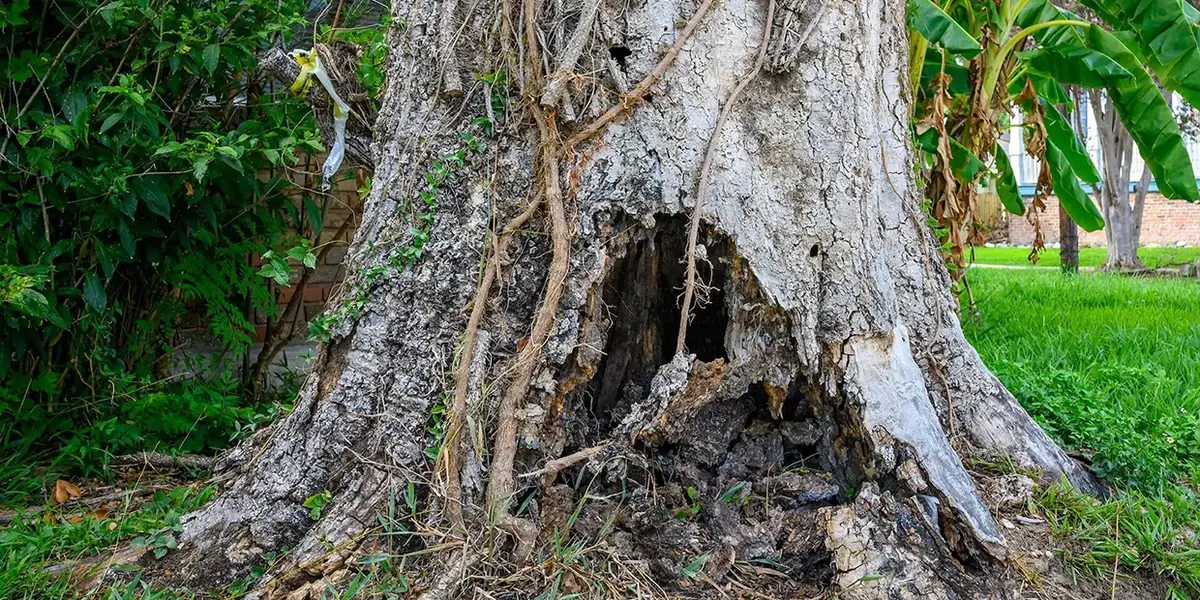
soil heaving, exposed or girdling roots, fungal conks (a visible sign of internal decay), and any recent lean, which in Pinellas' sandy soil can develop faster than people expect after a wet season or a nearby excavation.
The trunk
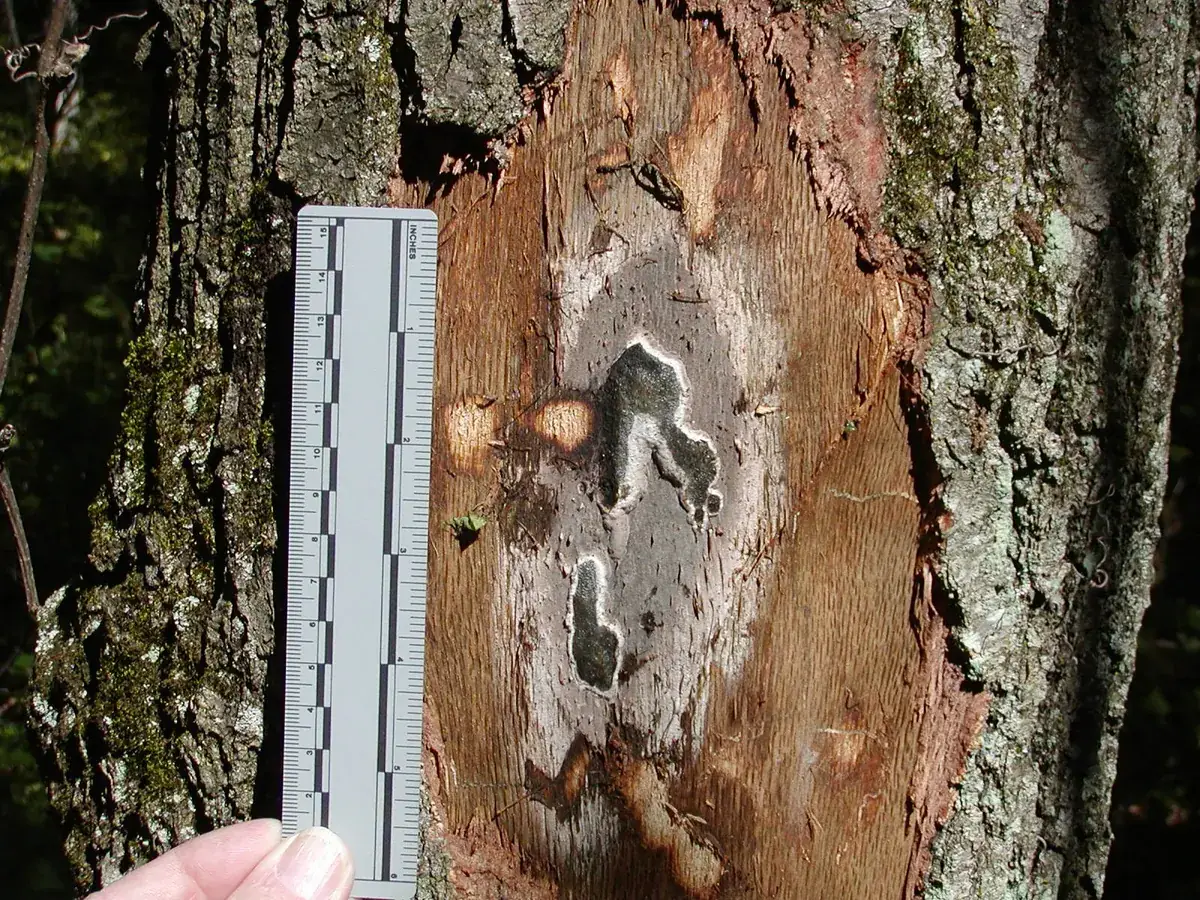
cavities, included bark at major unions, old wounds that never closed, cracks, and evidence of prior lightning strikes, which are a real and recurring finding here, Pinellas County sits in one of the most lightning-active parts of the country, and a strike doesn’t always leave obvious damage from the ground.
Scaffold limbs and crown
deadwood, weak attachments, and whether the tree was ever topped. Topping a tree forces a flush of weakly attached regrowth that fails more easily in wind than natural branch structure, a detail that matters a lot in a hurricane-prone county, and one reason a topped tree often assesses as higher risk than an untouched one of the same species and age.
The target
what’s actually within striking distance if a defective part fails: a roof, a carport, a fence, a neighbor’s yard, a pool cage, a place people regularly stand or park. A defect over open ground and the same defect over a bedroom are two different risk levels.
Species-specific behavior
a sabal palm fails differently than a live oak or a laurel oak, and an assessment accounts for that rather than applying one standard to every tree on the lot.
How the report gets used
The written assessment is the useful part, not just the visit. Three things it can support:
- A standard Pinellas County tree removal permit application, which asks for tree survey and risk information as part of the file. The county code even allows a property owner to pay for their own professional rating instead of waiting solely on a county inspection, our arborist qualifies to provide that.
- Florida Statute § 163.045, for the specific case of a single-family, owner-occupied home where the documented finding is that the tree’s risk can’t practically be brought down any way short of removal. When that test is met, the statute says the local government can’t require a permit, application, approval, fee, or replanting for that removal. It’s a narrow, specific exception, not a general "no permits" rule, and it doesn’t reach rentals, vacant land, commercial or multifamily property, or mangroves. See our hazardous tree removal page for how this plays out in practice.
- Insurance and HOA questions. A dated, signed professional finding is a better answer to "is that tree a liability" than a verbal opinion, whichever direction the finding goes.
Start here
Send us a photo of the tree.
You do not have to know whether it needs to come down. That is the part we are for.
- One photo, whole tree in frameTrunk base to top. A close-up of anything that looks wrong helps.
- Text us the photoThe text button below opens the right thread. Add your street and city.
- We come out and lookEvery estimate is in person, free, sometimes the answer is that it needs nothing.
How we actually do it
The arborist walks the tree in person, this isn’t done from a photo or a drive-by. On a typical residential visit: a full walk of the base and root flare, a look at the trunk from multiple angles, binocular inspection of the canopy for deadwood and structural defects, and a note of what’s within range if something fails. For a tree with a complicated crown or limited ground visibility, we’ll sometimes bring in a man lift to get eyes level with the defect instead of assessing it from the ground. The write-up follows, with the specific findings and a plain-language conclusion, not just a pass/fail.
If the assessment turns up a structural issue that pruning or cabling can address short of removal, we’ll say that too, see our cable and bracing page. If ongoing health issues rather than structural risk are the real question, that’s our tree health service instead, and often the two get done on the same visit.
Frequently Asked Questions
What’s the difference between a risk assessment and just "looking at the tree"? A risk assessment is documented, it records the specific defects found, the target(s) at risk, and a reasoned conclusion, signed by the ISA Certified Arborist who performed it. That documentation is what makes it useful to a permitting authority, an insurance company, or (in qualifying cases) Florida Statute 163.045. A verbal opinion on a driveway isn’t any of those things, even if it’s correct.
Can a risk assessment get me out of a Pinellas County tree permit? Sometimes, for a specific, narrow situation: a single-family, owner-occupied home where the arborist documents that the tree poses a risk that can’t practically be reduced any way short of removal. When that’s true, Florida Statute 163.045 says the local government can’t require a permit, application, fee, or replanting for that removal. It does not apply to rentals, vacant lots, commercial or multifamily property, or mangroves, and it isn’t a blanket "no permits ever" for the property. We’ll tell you plainly whether your situation qualifies before you pay for anything.
What if my tree doesn’t qualify for the statute, was the assessment wasted? No. Pinellas County’s own permit process asks for a tree survey and risk information as part of a standard application, and the county code specifically allows a property owner to pay for their own professional tree rating rather than wait on a county inspection. Our documentation supports that application either way, it just doesn’t remove the permit requirement if the property or the risk level doesn’t meet the statute’s test.
How long does an assessment take? It depends on the number of trees and the site, but a single-tree residential assessment is typically a same-visit walk of the tree from base to crown, checking root flare, trunk, scaffold limbs, and canopy, followed by a written report. We’ll give you a time estimate when you call.
Do you assess trees that turn out to be fine? Regularly, and we’ll say so in writing. An honest "this tree is sound" is as much the point of the service as flagging a real hazard, it’s the same documentation either way, and it’s useful if a neighbor, an HOA, or an insurer ever raises a question about the tree.
Available throughout Clearwater and the rest of Pinellas County.
Next step
Call (727) 365-1803 or request a free estimate to get a documented assessment, the honest finding, whichever way it goes.
Google reviews
Rated 4.9 by 464 of your neighbors.
Reviews · Tree Risk Assessment in Pinellas County
4.9
464 reviews on Google, the count on our public Google listing
“Happy trees did an amazing job cutting my trees and providing information. Steve was really nice and knowledgeable. Great communication and pricing. Definitely will be using their service again!!”
“Fast quote and when we decided it was time to remove our Oak, they were there on time and ready to get to work. They have all the equipment necessary for this huge job and work very efficiently.”
Every one of these lives on our public Google listing, where we cannot edit or delete a word. Read them all on Google →
Frequently asked
Questions we get asked on this one.
What's the difference between a risk assessment and just 'looking at the tree'?
A risk assessment is documented, it records the specific defects found, the target(s) at risk, and a reasoned conclusion, signed by the ISA Certified Arborist who performed it. That documentation is what makes it useful to a permitting authority, an insurance company, or (in qualifying cases) Florida Statute 163.045. A verbal opinion on a driveway isn’t any of those things, even if it’s correct.
Can a risk assessment get me out of a Pinellas County tree permit?
Sometimes, for a specific, narrow situation: a single-family, owner- occupied home where the arborist documents that the tree poses a risk that can’t practically be reduced any way short of removal. When that’s true, Florida Statute 163.045 says the local government can’t require a permit, application, fee, or replanting for that removal. It does not apply to rentals, vacant lots, commercial or multifamily property, or mangroves, and it isn’t a blanket "no permits ever" for the property. We’ll tell you plainly whether your situation qualifies before you pay for anything.
What if my tree doesn't qualify for the statute, was the assessment wasted?
No. Pinellas County’s own permit process asks for a tree survey and risk information as part of a standard application, and the county code specifically allows a property owner to pay for their own professional tree rating rather than wait on a county inspection. Our documentation supports that application either way, it just doesn’t remove the permit requirement if the property or the risk level doesn’t meet the statute’s test.
How long does an assessment take?
It depends on the number of trees and the site, but a single-tree residential assessment is typically a same-visit walk of the tree from base to crown, checking root flare, trunk, scaffold limbs, and canopy, followed by a written report. We’ll give you a time estimate when you call.
Do you assess trees that turn out to be fine?
Regularly, and we’ll say so in writing. An honest "this tree is sound" is as much the point of the service as flagging a real hazard, it’s the same documentation either way, and it’s useful if a neighbor, an HOA, or an insurer ever raises a question about the tree.