4.9 · 464 Google reviews · Licensed & Insured
Happy’s › Services › Tree Health, Disease & Pest Diagnosis
Tree Health, Disease & Pest Diagnosis
Thinning canopy, early leaf drop or dieback has a cause. An ISA Certified Arborist diagnoses before anyone sells you a treatment. (727) 365-1803.
“Steven was great, him and his crew got out early and was here all day taking out my four laurel oaks for me. Start to finish it was a pleasure working with happy tree service. The speed and efficiency of the work was fantastic.”
- 464 Google reviews
- Licensed & Insured
- ISA Certified Arborist on staff
- Pinellas since 1989
A tree that looks wrong isn’t automatically a tree that’s dying, and a tree that looks fine isn’t automatically healthy underneath. Happy’s Tree Service has been diagnosing tree health issues across Pinellas County since 1989, with an ISA Certified Arborist making the call rather than guessing based on how the canopy looks from the driveway.
Reading the actual cause, not just the symptom
Discoloration, thinning canopy, dieback, and slow decline can all come from several different causes that look similar from a distance but need completely different treatment:
Nutrient deficiency
which shows up frequently in Pinellas County because the sandy soil that makes up most of the peninsula drains fast and holds onto nutrients poorly compared to denser inland soils. Palms in particular are prone to specific, recognizable deficiency patterns, frizzled new growth, yellowing on older fronds, that get mistaken for disease when they’re actually a fertility issue with a known fix.
Root stress
from over-irrigation, drought stress, soil compaction from construction or heavy equipment nearby, or root damage from grade changes. Sandy soil holds a root system more loosely than clay, which makes root-zone problems more common here than in a lot of the country.
Fungal and bacterial issues
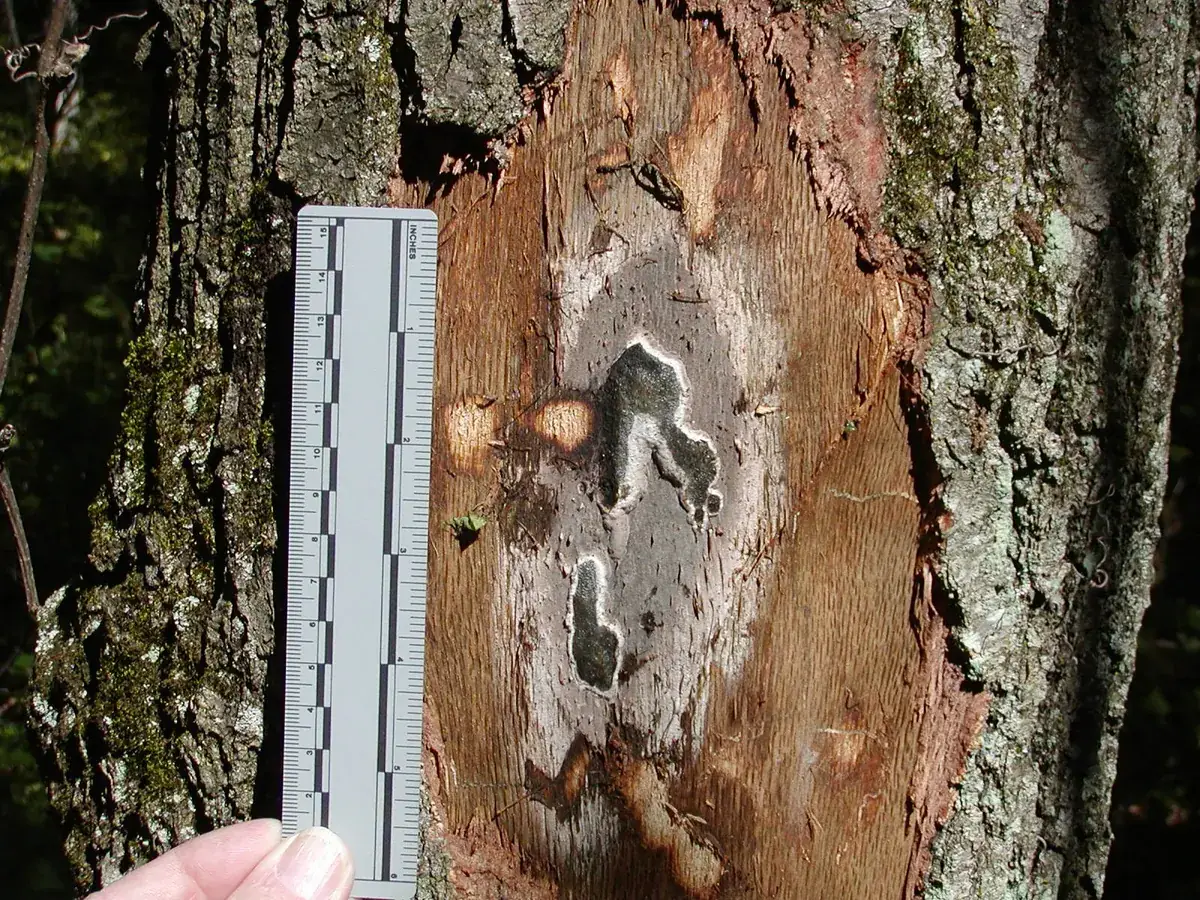
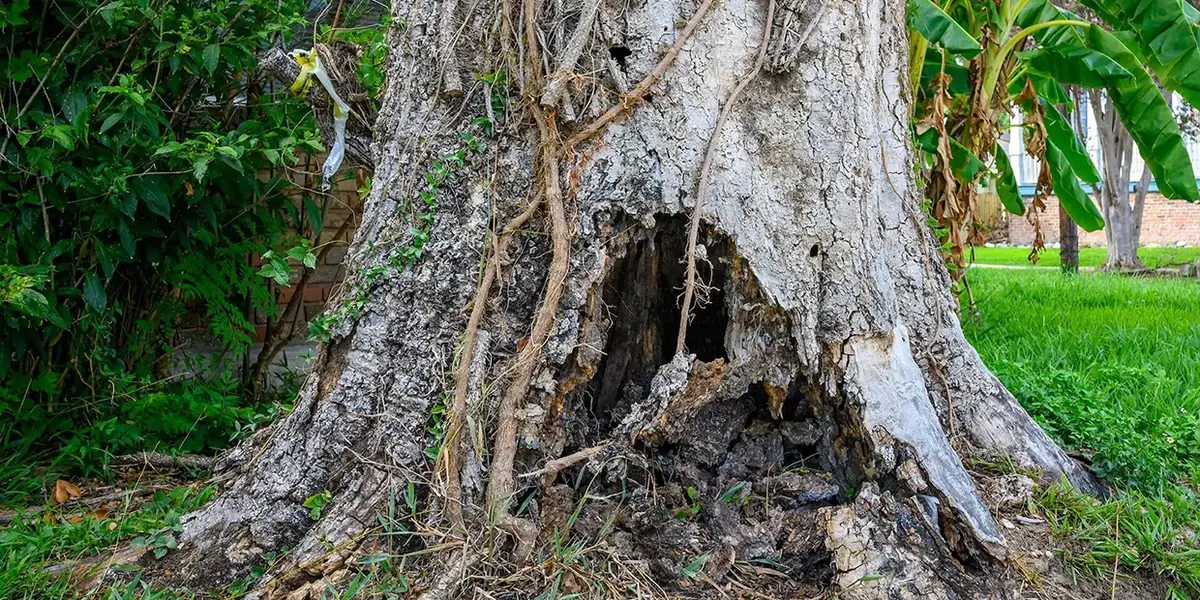
some of which show up as canopy dieback or discoloration and some of which show up as visible conks (fungal fruiting bodies) on the trunk or root flare, a more serious sign, since it usually indicates internal decay already underway.
Pest activity
from boring insects to scale and other sap-feeders, each with different treatment approaches and different urgency levels.
Prior physical damage
lightning strikes (see our lightning protection page), storm damage, or an old pruning wound that never closed properly and became an entry point for decay.
Normal seasonal behavior
for the species, some trees drop leaves or show color changes at a specific time of year that has nothing to do with a health problem at all.
The point of an actual diagnosis is telling these apart before recommending anything, rather than treating every declining tree the same way.
How we actually do it
The visit starts with a walk of the tree from the ground up, canopy density and color, deadwood pattern, trunk and root flare condition, any visible fungal growth, and the surrounding soil and irrigation conditions, since a lot of health issues trace back to the site, not the tree itself. We’ll ask about recent changes nearby, new construction, grade changes, irrigation adjustments, recent storms, since those are frequently the actual trigger for a health decline that shows up weeks or months later.
Where the cause isn’t obvious from a visual inspection, we’ll say so rather than guess, and recommend the next step honestly, which is sometimes treatment, sometimes monitoring, and occasionally an honest conversation that a tree has declined past the point where treatment changes the outcome.
If a health issue has progressed to the point of real structural concern, significant internal decay, root system failure, a dead scaffold limb over something that matters, that becomes a tree risk assessment question, and we’ll tell you plainly when that’s the case. For general shaping, deadwood removal, or storm prep once a tree’s health is confirmed, see our tree pruning page, and for a full consultation covering your whole property rather than one tree, see arborist consultation.
Start here
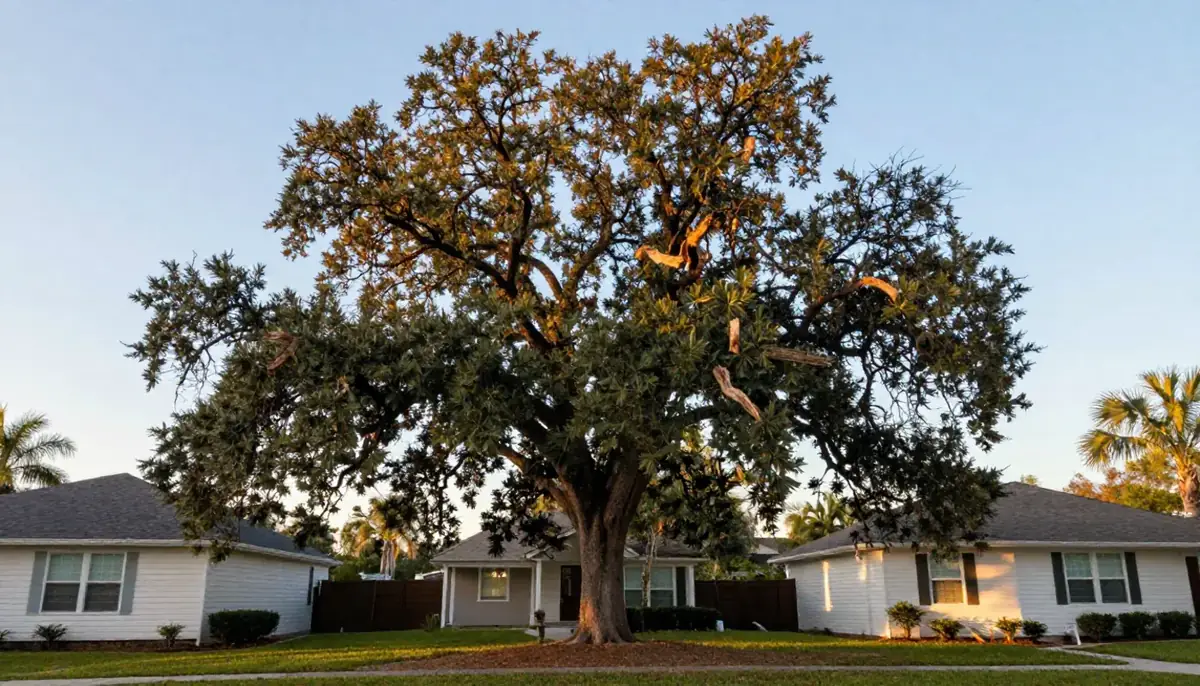
Send us a photo of the tree.
You do not have to know whether it needs to come down. That is the part we are for.
- One photo, whole tree in frameTrunk base to top. A close-up of anything that looks wrong helps.
- Text us the photoThe text button below opens the right thread. Add your street and city.
- We come out and lookEvery estimate is in person, free, sometimes the answer is that it needs nothing.
Frequently Asked Questions
My tree’s leaves are turning brown or yellow, is it dying? Not necessarily. Discoloration can mean a lot of things, nutrient deficiency (common in Pinellas' sandy, fast-draining soil), root stress from over- or under-watering, a fungal or bacterial issue, or normal seasonal leaf drop for that species. We diagnose rather than guess, and a fair number of "dying" trees we’re called out for turn out to be treatable or even completely normal for the season.
What’s the most common tree health problem you see in Pinellas County? Root stress from sandy, fast-draining soil combined with either over-irrigation or drought stress is extremely common here, along with fungal issues that show up after wet-season stretches. Palms have their own set of nutrient deficiency patterns that are frequently misdiagnosed as disease.
Can a sick tree become a hazardous one? Yes, declining vigor, root disease, and internal decay from an untreated fungal issue can all progress into a genuine structural risk over time. If a health issue has already reached that point, see our tree risk assessment page, which is the right service once structural failure is the actual concern.
Do you treat diseases, or just diagnose them? Diagnosis and a treatment recommendation are both part of the visit. Some issues are treatable directly, soil amendment, root zone correction, targeted treatment for a specific pathogen or pest, and some are past the point where treatment changes the outcome, in which case we’ll say that honestly rather than sell a treatment plan that won’t work.
How is this different from a risk assessment? Tree health looks at vigor, disease, and pests, is the tree thriving, declining, or sick, and why. A risk assessment looks specifically at structural failure potential, could a part of this tree come down, and onto what. A lot of visits involve both, since a sick tree can develop structural problems as it declines.
Serving Clearwater and all of Pinellas County.
Next step
Call (727) 365-1803 or request a free estimate for an honest diagnosis, treatable, monitor-and-wait, or past the point of saving, whichever is actually true.
Google reviews
Rated 4.9 by 464 of your neighbors.
Reviews · Tree Health, Disease & Pest Diagnosis
4.9
464 reviews on Google, the count on our public Google listing
“We were looking for a tree service with a certified arborist. We got just what we needed with Happy Tree Service. Steve gave an estimate and knowledgeable advice. They arrived on time did an excellent job and cleaned up all debris. We recommend them and will use them again.”
“Happy trees did an amazing job cutting my trees and providing information. Steve was really nice and knowledgeable. Great communication and pricing. Definitely will be using their service again!!”
Every one of these lives on our public Google listing, where we cannot edit or delete a word. Read them all on Google →
Frequently asked
Questions we get asked on this one.
My tree's leaves are turning brown or yellow, is it dying?
Not necessarily. Discoloration can mean a lot of things, nutrient deficiency (common in Pinellas' sandy, fast-draining soil), root stress from over- or under-watering, a fungal or bacterial issue, or normal seasonal leaf drop for that species. We diagnose rather than guess, and a fair number of "dying" trees we’re called out for turn out to be treatable or even completely normal for the season.
What's the most common tree health problem you see in Pinellas County?
Root stress from sandy, fast-draining soil combined with either over-irrigation or drought stress is extremely common here, along with fungal issues that show up after wet-season stretches. Palms have their own set of nutrient deficiency patterns that are frequently misdiagnosed as disease.
Can a sick tree become a hazardous one?
Yes, declining vigor, root disease, and internal decay from an untreated fungal issue can all progress into a genuine structural risk over time. If a health issue has already reached that point, see our tree risk assessment page, which is the right service once structural failure is the actual concern.
Do you treat diseases, or just diagnose them?
Diagnosis and a treatment recommendation are both part of the visit. Some issues are treatable directly, soil amendment, root zone correction, targeted treatment for a specific pathogen or pest, and some are past the point where treatment changes the outcome, in which case we’ll say that honestly rather than sell a treatment plan that won’t work.
How is this different from a risk assessment?
Tree health looks at vigor, disease, and pests, is the tree thriving, declining, or sick, and why. A risk assessment looks specifically at structural failure potential, could a part of this tree come down, and onto what. A lot of visits involve both, since a sick tree can develop structural problems as it declines.
Related