4.9 · 464 Google reviews · Licensed & Insured
Happy’s › Services › Tree Trimming & Pruning in Pinellas County
Tree Trimming & Pruning in Pinellas County
Pruning to ANSI A300 standard - crown cleaning, reduction, clearance and structural cuts. No hat-racking, no lion-tailing. Free estimate: (727) 365-1803.
“This was the second time I'd hired Happy's to take down some dead trees and I couldn't be happier with the job they did. First off they gave me a great price for the amount of work I needed done.”
- 464 Google reviews
- Licensed & Insured
- ISA Certified Arborist on staff
- Pinellas since 1989
Pruning is the service most likely to be done wrong by someone who’s still genuinely trying to do a good job. Cutting a tree back hard looks productive, the yard looks "cleaned up," the canopy looks thinner and tidier, and it’s also, more often than not, the wrong move for the tree’s long-term health and structure. Happy’s Tree Service has been pruning trees across Pinellas County since 1989, with an ISA Certified Arborist on staff to make the call on what a given tree actually needs instead of defaulting to "cut it back."
Why pruning is a structural decision, not a haircut
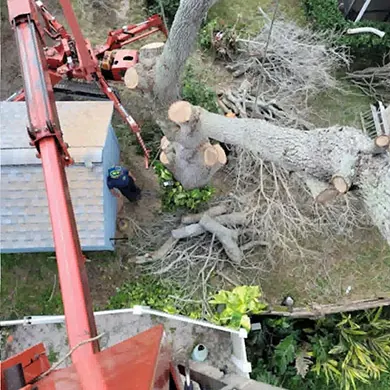
Every cut you make on a tree changes how it grows afterward. Remove the wrong limb and you can trigger weak regrowth exactly where you didn’t want more weight. Leave a bad structural defect, a codominant stem with included bark, a crossing branch rubbing against a scaffold limb, uncorrected for a few more years, and it gets harder and more expensive to fix later, not easier.
Pinellas County’s own tree ordinance recognizes this: cutting a tree back severely enough to seriously impair its natural form and function, including topping, aggressive thinning, or excessive root pruning, is legally defined as "effectively removing" the tree, not just pruning it, and can carry the same permit requirement as taking it out entirely. That’s not a technicality. It reflects something real about how a tree responds to a bad cut: past a certain point, you haven’t trimmed the tree, you’ve started killing or permanently weakening it.
For live oaks and laurel oaks, the two species that make up most of the mature canopy in this county, structural pruning done early, while a codominant stem or included-bark union is still small, is far cheaper and far more effective than trying to correct the same defect once the limb is large and heavy.
What good pruning actually looks like
Structural pruning on younger trees
correcting or removing weak unions and codominant stems while they’re small, so the tree develops one strong central form instead of two competing leaders that eventually split.
Canopy raising
removing lower limbs for clearance over a driveway, walkway, or roofline, done at branch collars rather than flush cuts that don’t heal properly.
Deadwooding
removing dead limbs before they fail on their own, useful ahead of hurricane season, when dead wood in the canopy becomes wind-borne debris.
Selective thinning
to reduce wind resistance on a dense canopy, without stripping enough live wood to stress the tree or trigger a flush of weak regrowth.
Root pruning
handled carefully and sparingly, since excessive root cutting can destabilize a tree in Pinellas' sandy soil even when the canopy above looks untouched.
What we don’t do: topping (cutting main limbs back to stubs), lion-tailing (stripping interior growth and leaving foliage only at branch tips, which shifts weight to the ends and increases failure risk in wind), or over-thinning past the point where the tree can recover its structure on its own.
Start here
Send us a photo of the tree.
You do not have to know whether it needs to come down. That is the part we are for.
- One photo, whole tree in frameTrunk base to top. A close-up of anything that looks wrong helps.
- Text us the photoThe text button below opens the right thread. Add your street and city.
- We come out and lookEvery estimate is in person, free, sometimes the answer is that it needs nothing.
How we actually do it
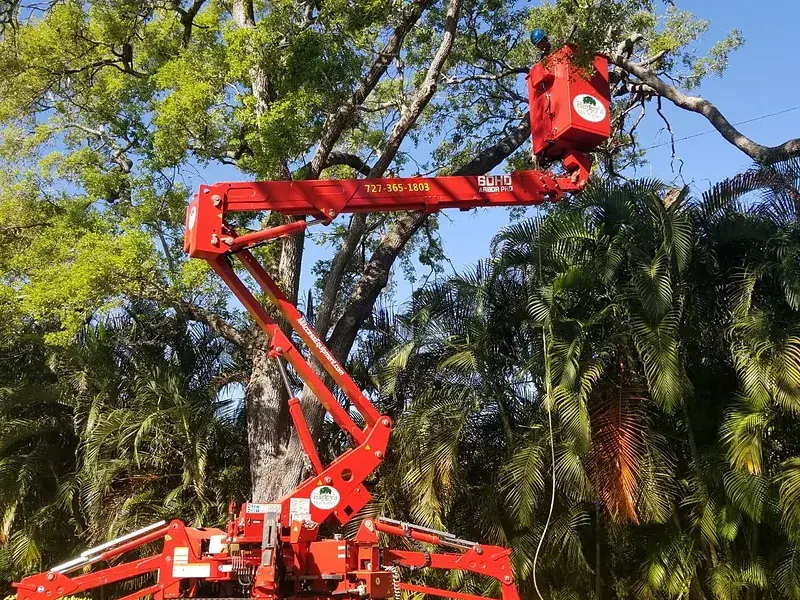
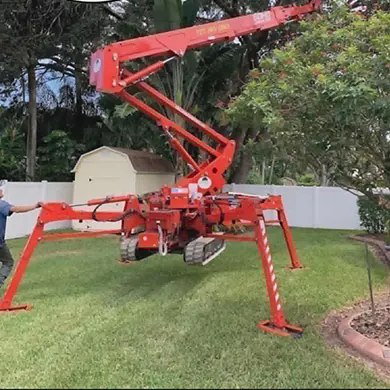
The arborist looks at the tree’s current structure and species before any cuts are planned, what needs correcting now, what can wait, and what’s fine as-is. Cuts are made at the branch collar, not flush against the trunk, so the tree can compartmentalize and heal the wound properly rather than leaving an open path for decay. On larger limbs or work high in the canopy, we use our man lifts to get proper access and control, rather than working blind from a ladder or over-reaching with a pole saw. Debris is chipped or hauled the same day.
Palms get handled completely differently from broadleaf trees, see our palm tree trimming page for why a sabal palm’s single growing point changes the entire approach. And if pruning turns up a structural issue serious enough that cabling or bracing would help more than another round of cuts, that’s covered on our cable and bracing page.
Frequently Asked Questions
What’s the difference between pruning and trimming? In practice, most people use the words interchangeably, and so do we on this page. The real distinction is between routine trimming (light deadwooding, canopy shaping, clearance) and structural pruning (cuts made specifically to correct or prevent a future structural problem, like removing a co-dominant stem before it becomes a failure point). We’ll tell you which your tree actually needs.
Is there such a thing as pruning too much off a tree? Yes, and it’s not just a cosmetic concern. Removing too much live canopy at once stresses the tree and can trigger weak, fast regrowth in the wrong places. Under Pinellas County’s tree code, pruning severe enough to seriously impact a tree’s natural form and function, this includes topping, over-thinning, and excessive root pruning, is legally treated the same as removing the tree, and can carry the same permit requirement. A qualified pruning job avoids that on purpose, not by accident.
Why don’t you top palms or hurricane-cut them? A sabal palm only grows from a single terminal bud at the top, there’s no dormant bud lower on the trunk to replace it. Topping or severely over-pruning that crown can kill the palm outright or leave it permanently weakened, which is the opposite of what "hurricane-cutting" is supposed to accomplish. See our palm tree trimming page for what we do instead.
How often should trees be pruned? It depends heavily on species, age, and location, a young live oak near a driveway needs different attention than a mature laurel oak in an open yard. We’ll recommend an interval specific to your trees rather than a blanket schedule.
Do you prune for storm preparation before hurricane season? Yes, reducing wind sail on a dense canopy and clearing deadwood that could become a projectile are legitimate pre-season steps, done correctly rather than as an aggressive cut-back. See our storm damage cleanup page for after-the-fact work.
Serving Clearwater, Seminole, and the rest of Pinellas County.
Next step
Call (727) 365-1803 or request a free estimate and we’ll tell you what your trees actually need, not what looks the most dramatic from the curb.
Google reviews
Rated 4.9 by 464 of your neighbors.
Reviews · Tree Trimming & Pruning in Pinellas County
4.9
464 reviews on Google, the count on our public Google listing
“Steven was great, him and his crew got out early and was here all day taking out my four laurel oaks for me. Start to finish it was a pleasure working with happy tree service. The speed and efficiency of the work was fantastic.”
“This was the second time I'd hired Happy's to take down some dead trees and I couldn't be happier with the job they did. First off they gave me a great price for the amount of work I needed done.”
Every one of these lives on our public Google listing, where we cannot edit or delete a word. Read them all on Google →
Frequently asked
Questions we get asked on this one.
What's the difference between pruning and trimming?
In practice, most people use the words interchangeably, and so do we on this page. The real distinction is between routine trimming (light deadwooding, canopy shaping, clearance) and structural pruning (cuts made specifically to correct or prevent a future structural problem, like removing a co-dominant stem before it becomes a failure point). We’ll tell you which your tree actually needs.
Is there such a thing as pruning too much off a tree?
Yes, and it’s not just a cosmetic concern. Removing too much live canopy at once stresses the tree and can trigger weak, fast regrowth in the wrong places. Under Pinellas County’s tree code, pruning severe enough to seriously impact a tree’s natural form and function, this includes topping, over-thinning, and excessive root pruning, is legally treated the same as removing the tree, and can carry the same permit requirement. A qualified pruning job avoids that on purpose, not by accident.
Why don't you top palms or hurricane-cut them?
A sabal palm only grows from a single terminal bud at the top, there’s no dormant bud lower on the trunk to replace it. Topping or severely over-pruning that crown can kill the palm outright or leave it permanently weakened, which is the opposite of what "hurricane-cutting" is supposed to accomplish. See our palm tree trimming page for what we do instead.
How often should trees be pruned?
It depends heavily on species, age, and location, a young live oak near a driveway needs different attention than a mature laurel oak in an open yard. We’ll recommend an interval specific to your trees rather than a blanket schedule.
Do you prune for storm preparation before hurricane season?
Yes, reducing wind sail on a dense canopy and clearing deadwood that could become a projectile are legitimate pre-season steps, done correctly rather than as an aggressive cut-back. See our storm damage cleanup page for after-the-fact work.